
April 13, 2026 — Iowa City, IA
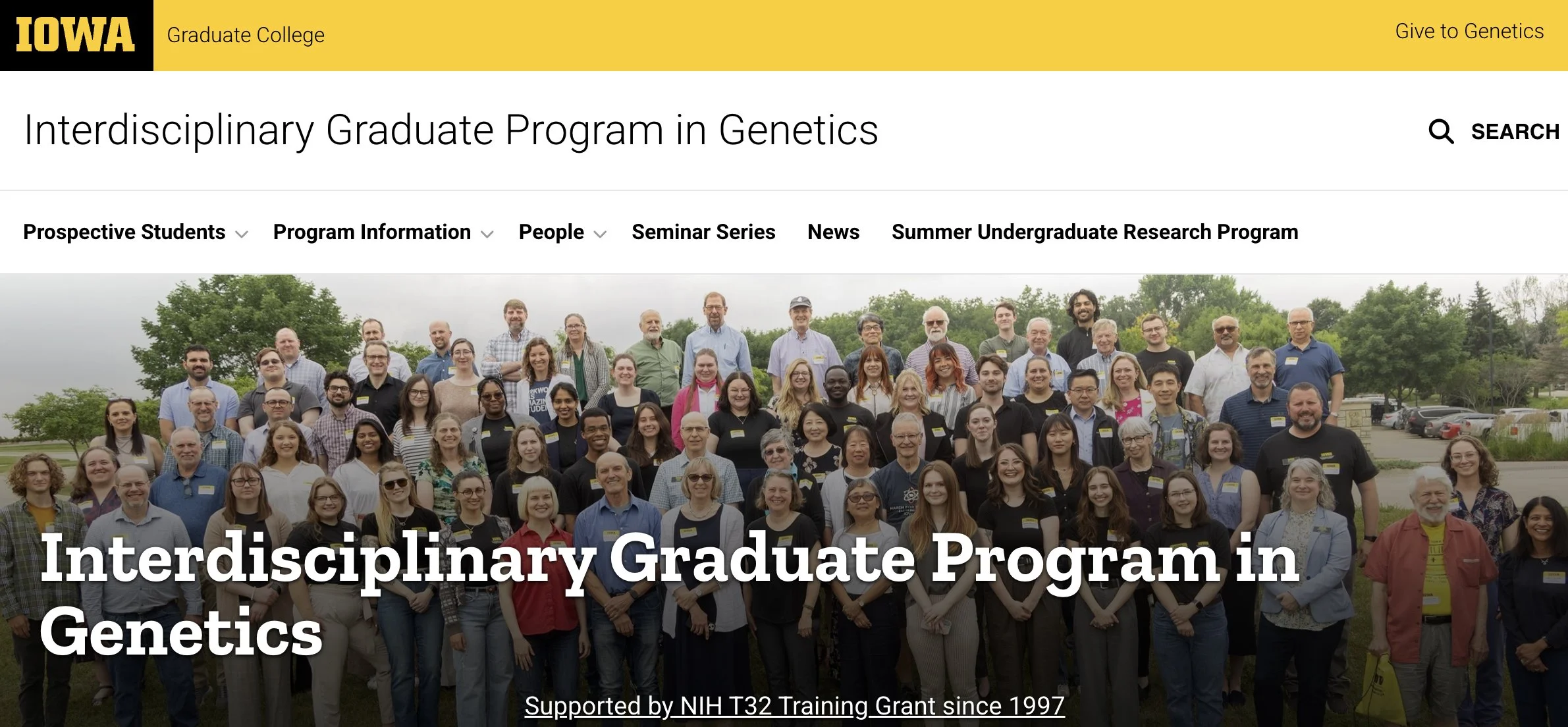
Dr. Martin visited the University of Iowa on April 13 as a guest speaker for the Genetics Graduate Program. This marked Dr. Martin's second visit to the university this year, having previously presented to the program in January 2026, reflecting the strong interest in the Martin Lab's research among Iowa's genetics faculty and trainees. During his visit, Dr. Martin presented foundational and ongoing work from the lab on the genetic regulation of heart size and cardiac regeneration. His seminar was part of the program's coursework in scientific literature analysis, where graduate students develop the skills to critically read, interpret, and evaluate primary research articles. In preparation for the visit, students studied two of the lab's landmark publications, giving them the opportunity to engage directly with the scientist behind the work and gain firsthand insight into the experimental reasoning, challenges, and discoveries that shaped each paper.

Issue cover for Heallen et. al.., 2011, our discovery for Hippo in cardiac organ size
The first paper, published in Science in 2011, demonstrated that the Hippo signaling pathway restricts cardiomyocyte proliferation and heart size during development. Using cardiac-specific knockout of the Hippo pathway component Salvador (Sav1) in mice, the study revealed that Hippo-deficient embryos develop severely enlarged hearts due to a dramatic increase in cardiomyocyte proliferation. Crucially, the work uncovered a previously unknown nuclear interaction between the Hippo effector YAP and β-catenin, a key mediator of canonical Wnt signaling, on the promoters of cardiac growth genes. Genetic rescue experiments showed that reducing β-catenin dosage suppressed the overgrowth phenotype, establishing that Hippo restrains heart size in part by antagonizing Wnt-driven cardiomyocyte proliferation. For students learning to dissect a research article, this paper offers a masterclass in genetic epistasis, demonstrating how loss-of-function and rescue experiments can be layered to build a mechanistic argument.
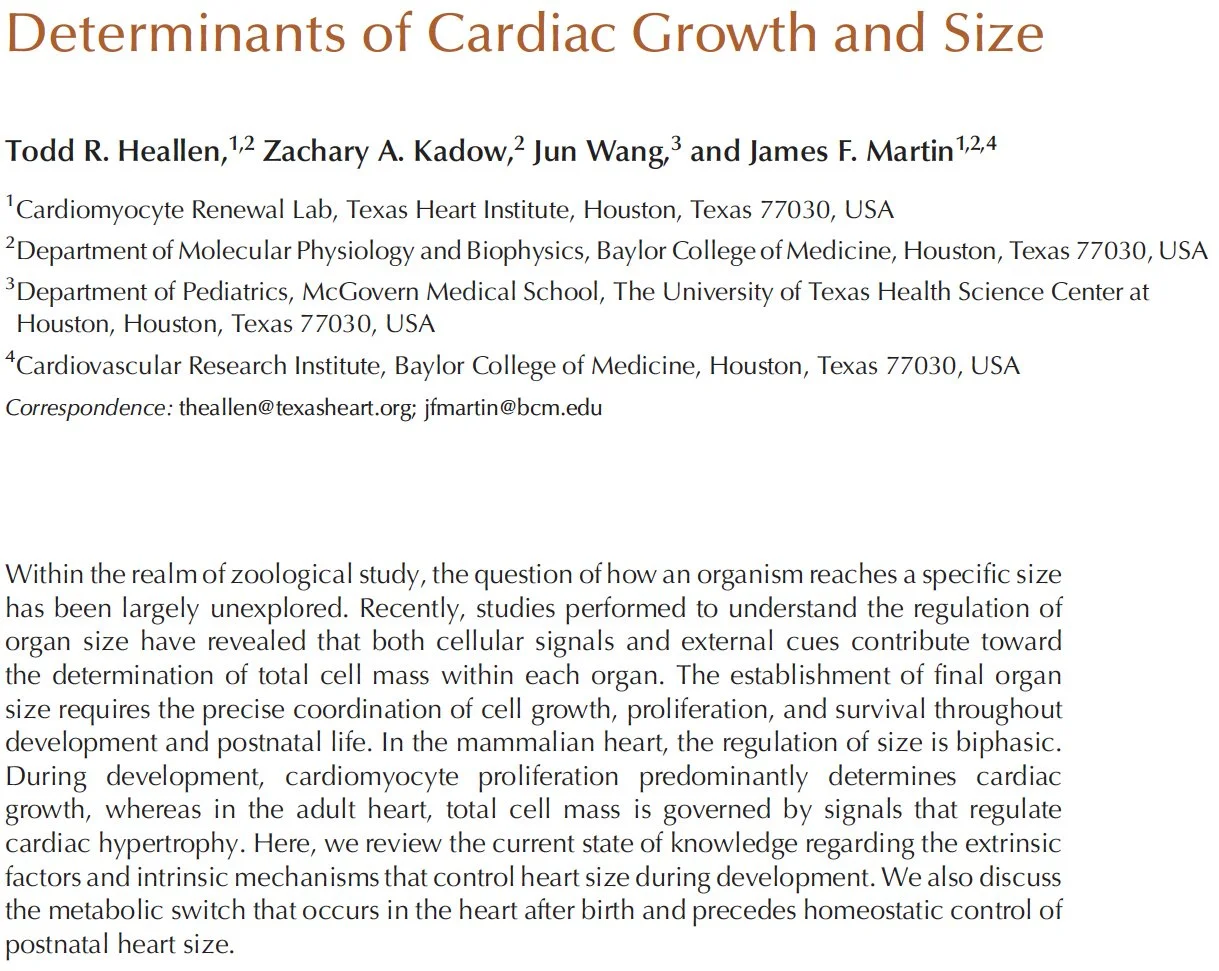
The second paper, a comprehensive review in Cold Spring Harbor Perspectives in Biology (2020), placed these discoveries in a broader context and served as a complementary resource for students learning to connect individual findings to the wider landscape of a field. The review detailed how heart size is regulated across two major phases of growth: hyperplastic expansion driven by cardiomyocyte proliferation during embryonic development, and hypertrophic growth governed by cell-size increases after birth. It highlighted the signaling crosstalk among the Hippo, Wnt, and IGF pathways during cardiogenesis and discussed the metabolic switch from glycolysis to oxidative phosphorylation that accompanies postnatal cardiomyocyte maturation and cell-cycle exit. The review also explored the emerging therapeutic potential of manipulating Hippo-YAP signaling to stimulate cardiomyocyte renewal in the adult heart, work that has since advanced to a Phase I clinical trial (SALVADOR-HF, NCT06831825) and the founding of Medley Therapeutics.
Pairing a primary research article with a review by the same group gave students a unique pedagogical experience, the chance to see how a single set of experimental observations evolves into a broader framework of understanding over the course of a decade. Dr. Martin's visit brought that trajectory to life, offering the kind of context that cannot be captured on the printed page.
The visit was hosted by the Iowa Genetics Graduate Program, with course direction by Dr. Ginny Willour and coordination by Program Associate Sydney Schmeltz. Dr. Martin's presentation provided students and faculty with an in-depth look at how basic discoveries in organ-size control have been translated toward regenerative therapies for heart failure. We thank the University of Iowa Genetics Graduate Program for the invitation and for their continued interest in the Martin Lab's work.